

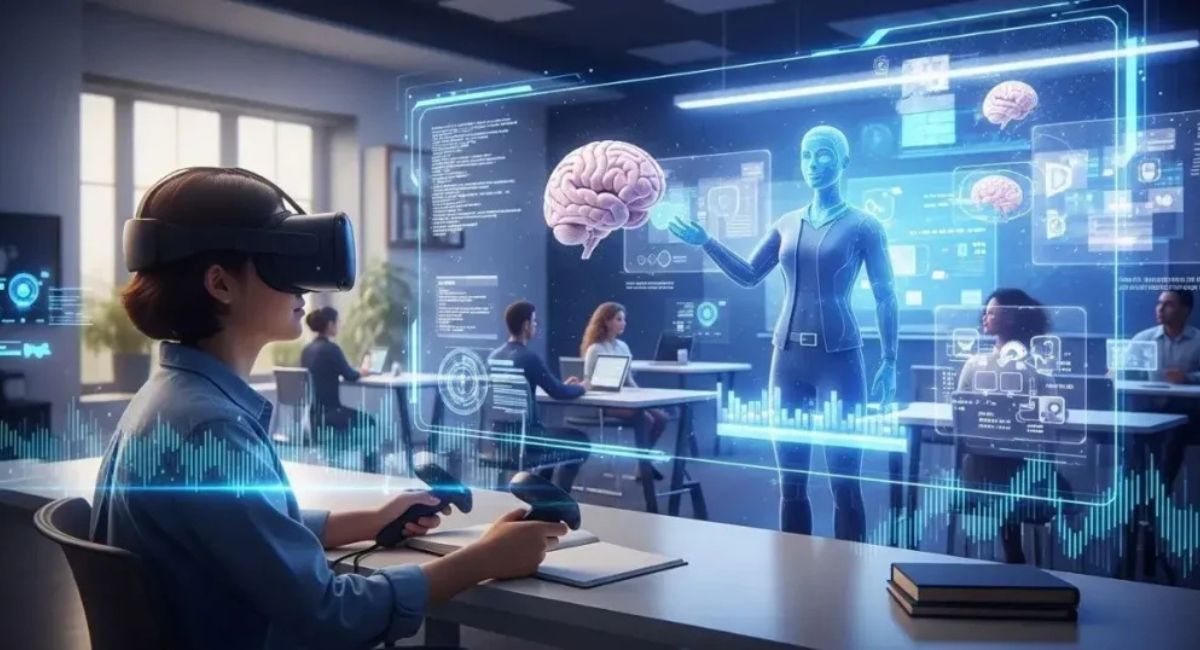
In conclusion, the role of AI in creating interactive learning is revolutionizing education across the USA. From intelligent tutoring systems (ITS) and adaptive learning platforms to virtual learning environments (VLEs) and AI-powered personalized learning slot machines, students now enjoy dynamic and personalized learning experiences. Teachers gain more time for mentorship and creativity while AI handles routine tasks and provides real-time feedback. By bridging content with engagement, AI empowers educators and inspires learners. The future of classrooms is no longer static; it is interactive, inclusive, and tailored, making AI in education an essential partner in shaping tomorrow’s learners.
Role of AI in Creating Interactive Learning: Education A Future
Education is changing fast, and the role of AI in creating interactive learning is at the center of this transformation. AI in education is no longer just a concept; it is helping students learn in ways that were once impossible. Transforming traditional classrooms into engaging, dynamic spaces, AI provides dynamic and personalized learning experiences for every student. Schools in the USA are now using AI-powered tools to tailor lessons, track progress, and make learning exciting and effective.
From virtual tutors to intelligent analytics, technology now supports teachers in ways that free them from repetitive tasks. Understanding student context allows AI to adapt lessons instantly. This not only saves time but also boosts motivation and emotional engagement in learning, creating a classroom where every learner feels supported and inspired.
From Static Slides to Dynamic Learning Experiences
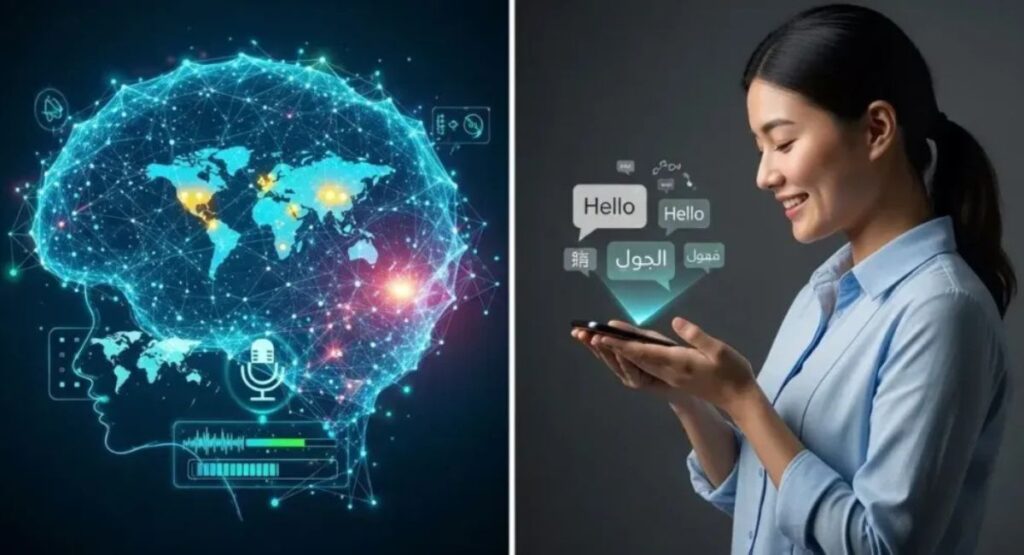
Traditional teaching relied on fixed slides and lectures. Students often memorized facts without understanding. Now, adaptive learning platforms transform content into interactive journeys. Lessons include 3D models, AI PPT templates, and immersive virtual labs. Students explore concepts at their own pace while teachers monitor progress in real time. This shift from passive to active learning is what role of AI in creating interactive learning achieves in modern education.
In the USA, many schools are embracing AI in science education and AI language learning tools. These systems allow learners to experiment, translate, and practice safely and effectively. Students can now receive real-time feedback, making each lesson meaningful and personalized. The classroom evolves from a static environment into one with dynamic and personalized learning experiences, bridging theory and application seamlessly.
Making Learning Personal with AI

Every student learns differently. AI-powered personalized learning slot machine adapts content to match individual strengths and weaknesses. It uses learning analytics to create tailored learning paths that guide each student. Whether someone excels at reading or needs visual support, AI ensures lessons are effective and engaging. This makes personalized educational interventions possible for every learner, increasing understanding and retention.
Adaptive systems also handle assessments automatically. AI-driven assessments analyze responses, highlight gaps, and adjust content instantly. Teachers can focus on teaching rather than grading. Students feel less pressure and more confidence. By bridging content and emotion, AI ensures learning is not only informative but also emotionally engaging.
How AI-Powered Tools Work
Intelligent tutoring systems (ITS) and virtual tutors and chatbots monitor student performance continuously. They provide intelligent tutoring feedback, offer explanations, and simulate one-on-one guidance. AI classroom tools track progress, adjust difficulty, and deliver lessons based on real-time insights. This combination of automation and personalization creates a learning environment that is interactive, supportive, and highly effective.
AI in Gamified and Collaborative Learning
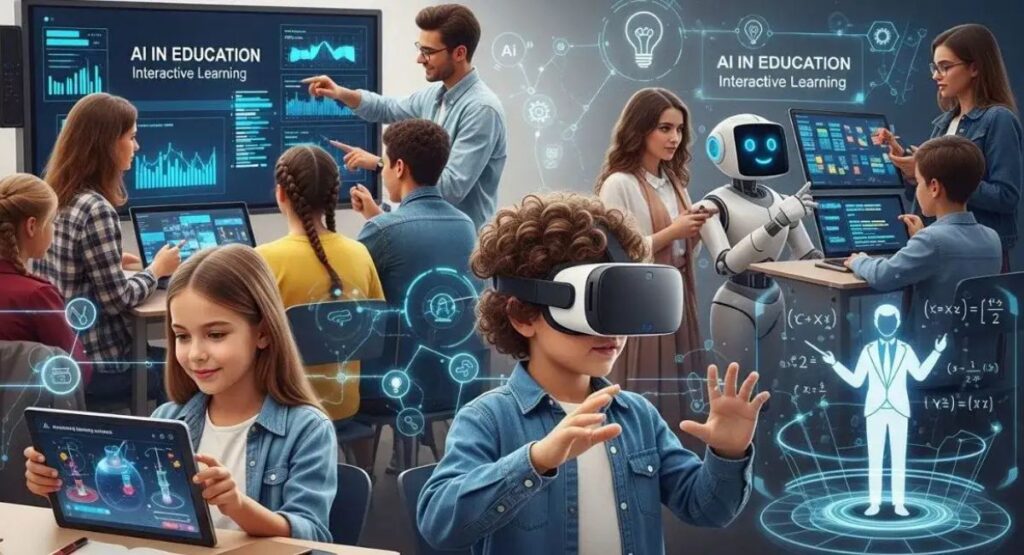
Learning becomes fun through gamification of learning. AI systems create challenges, reward achievements, and adjust difficulty to motivate students. Points, levels, and badges help learners stay engaged. AI-assisted collaborative learning allows students to work in teams, analyze performance, and improve communication skills. AI tools can measure participation, collaboration quality, and problem-solving efficiency, turning group work into a productive experience.
Gamified and collaborative platforms also promote competition in a healthy way. Students stay motivated while teachers gain insights into engagement and learning outcomes. By combining AI in education with playful and interactive methods, schools in the USA make learning more immersive, stimulating, and memorable for all students.
AI in Specialized Learning Areas
AI is revolutionizing AI in STEM and science education through virtual labs and simulations. Students can conduct experiments safely and learn complex topics effectively. AI language learning platforms offer real-time pronunciation correction, translation, and adaptive lessons. AI ensures students get help exactly when they need it, supporting individual learning styles and paces.
This approach is effective for remote learning and self-paced education. With AI-powered tools, content becomes interactive, practice is immediate, and concepts are easier to grasp. Schools benefit from higher engagement, and learners develop confidence and mastery across subjects. Adaptive content delivery ensures no student falls behind.
Benefits of AI in Specialized Learning
Students gain faster understanding, deeper retention, and higher motivation. Teachers save time with automated lesson planning and focus on mentoring. Lessons adapt to student needs, making learning more efficient and enjoyable. Personalized learning ensures every student succeeds, whether in STEM, languages, or creative subjects.
Benefits of AI in the Classroom
The role of AI in creating interactive learning extends beyond content delivery. It improves enhancing student engagement, offers real-time student progress tracking, and increases accessibility for all learners. Schools can implement AI classroom tools and AI teaching assistants to streamline tasks, from grading to administrative work, giving teachers more time to teach creatively.
Students experience personalized lessons, interactive simulations, and instant support. The use of virtual learning environments (VLEs) allows teachers to monitor and adjust strategies efficiently. This blend of technology and pedagogy improves outcomes, making learning meaningful, inclusive, and fun. Adaptive learning platforms ensure each lesson meets the unique needs of every student.
Challenges and Ethical Considerations
AI in education comes with responsibilities. Data privacy, bias in algorithms, and overreliance are major concerns. Schools in the USA follow strict guidelines to ensure predictive analytics in education is ethical. AI must complement, not replace, human teaching, and teachers remain central to student success.
Transparency and fairness are critical. Policies ensure AI-powered tools are used responsibly. Students, parents, and educators must understand the system’s decisions. Balancing innovation with ethics creates trust, safety, and effective learning environments.
Ensuring Responsible AI Use
Schools implement clear rules for AI usage. Teacher training, monitoring, and regular audits make sure AI is fair, accurate, and supportive. By combining technology with human guidance, role of AI in creating interactive learning can reach its full potential while staying safe and ethical.
Real-World Applications and Case Studies
US schools and universities use platforms like DreamBox, Labster, and Carnegie Learning to improve learning outcomes. AI-powered tools provide instant feedback, simulate labs, and adjust lessons based on student needs. Virtual classrooms integrate collaborative learning, enabling team projects and problem-solving exercises in real time.
For example, DreamBox uses an AI-powered personalized learning slot machine approach for math, tailoring problems to student performance. Labster offers virtual labs for science, allowing safe experimentation. These applications show how AI in higher education and K-12 classrooms creates dynamic and personalized learning experiences that benefit teachers and students alike.
How Teachers Can Leverage AI Effectively
Teachers can start small by using AI classroom tools for quizzes, homework, or virtual labs. Monitoring progress with dashboards enables adaptive content delivery, while real-time feedback ensures students receive support instantly. Collecting student feedback helps improve engagement and outcomes.
By integrating AI-powered tools like intelligent tutoring systems (ITS) and virtual assistants, teachers enhance their lessons without extra workload. This creates personalized educational interventions while fostering curiosity, collaboration, and creativity. AI becomes a partner, not a replacement, in the learning process.
Future of AI-Interactive Education
The future of AI-driven education looks promising. Predictive analytics, immersive simulations, and fully AI-powered tutors will provide dynamic and personalized learning experiences for every student. Teachers will continue to guide learning while AI handles repetitive tasks, assessments, and adaptation.
As AI advances, education will be more accessible, inclusive, and effective. Virtual learning environments (VLEs) and AI in STEM and science education will shape classrooms where students explore, experiment, and grow. The role of AI in creating interactive learning is no longer optional—it is essential for a future-ready education system.
From Static Slides to Dynamic Learning Experiences
| Field / Area | AI Applications | Functions / Tools | Benefits |
| K-12 Education | Intelligent Tutoring Systems (ITS) | Adaptive lessons, real-time feedback, personalized exercises | Improves understanding, engagement, and retention |
| Higher Education | Predictive Analytics in Education | Dropout risk prediction, performance analysis | Early interventions, better student outcomes |
| STEM & Science | Virtual Labs & AI in Science Education | Simulations, interactive experiments, data analysis | Safe hands-on practice, deeper conceptual learning |
| Language Learning | AI Language Learning Tools | Pronunciation correction, grammar suggestions, adaptive exercises | Enhances fluency, comprehension, and confidence |
| Classroom Management | AI Teaching Assistants & Chatbots | Answer questions, assist homework, provide learning guidance | Reduces teacher workload, ensures student support 24/7 |
| Collaborative Learning | AI-Assisted Collaborative Learning | Group project tracking, communication analysis, peer feedback | Encourages teamwork, improves problem-solving skills |
| Assessment & Grading | AI-Driven Assessments | Automated grading, personalized quizzes, analytics dashboards | Saves time, provides precise performance insights |
| Interactive Learning | AI PPT Templates & AI PDFs for Education | Adaptive slides, interactive modules, multimedia integration | Engages students, simplifies lesson planning |
| Gamified Learning | Gamification Platforms | Progress tracking, adaptive challenges, rewards systems | Boosts motivation, participation, and retention |
| Special Needs Education | Personalized Learning Tools | Speech recognition, movement support, reading aids | Inclusive learning, tailored interventions for every student |
Gone are the days of boring lectures and static slides. Today, the role of AI in creating interactive learning transforms classrooms into dynamic, personalized experiences. Students can explore 3D models, hear real-time explanations, and receive content tailored to their pace, keeping engagement high and curiosity alive.
Making Learning Personal
AI doesn’t treat every student the same. By analyzing patterns, mistakes, and preferences, it creates personalized learning paths. Each learner gets content suited to their style, making adaptive learning platforms more effective and encouraging confidence, curiosity, and deeper understanding without feeling pressured or behind.
How AI-Powered Tools Work
Platforms like intelligent tutoring systems and AI chatbots monitor progress, adjust difficulty, and provide instant feedback. They act like personal mentors, helping students grasp tough concepts, while teachers focus on meaningful instruction and creativity rather than repetitive tasks
Role of AI in Education: Transforming Classrooms and Learning Experiences
What is AI in Education?
Explain the concept of AI in the educational context, including definitions, types of AI used (e.g., machine learning, natural language processing), and its role in modern classrooms.
How AI is Revolutionizing Learning
Discuss how AI shifts education from traditional methods to interactive, dynamic, and personalized experiences. Include examples like adaptive learning platforms.
Personalized Learning Through AI
Tailored Learning Paths for Students
AI-Powered Assessments and Feedback
Early Intervention and Progress Monitoring
AI Tools and Technologies in the Classroom
Intelligent Tutoring Systems (ITS)
Virtual Learning Environments (VLEs)
Chatbots and Virtual Assistants
AI in Specialized Learning
AI in Language Learning and Translation
Gamified Learning Experiences
Collaborative and Social Learning Platforms
Benefits of AI in Education
Improved Engagement and Motivation
Enhanced Accessibility and Inclusion
Time-Saving for Educators without Compromising Quality
Challenges and Ethical Considerations
Data Privacy and Security
Bias in AI Algorithms
Balancing Human and AI Roles in Education
Real-World Applications of AI in Schools and Universities
Provide concrete examples, case studies, or success stories showing AI implementation across different education levels.
How Teachers Can Use AI Effectively
Choosing the Right AI Tools
Starting Small and Scaling Gradually
Monitoring Student Progress and Adjusting Strategies
Collecting Feedback for Continuous Improvement
The Future of AI in Education
Emerging Trends and Innovations
AI’s Long-Term Impact on Learning and Teaching
Preparing for a Fully AI-Integrated Classroom
Conclusion
Summarize key insights, emphasize the transformative role of AI, and highlight the importance of balancing technology with human teaching.
Role of AI in Creating Interactive Learning: Education A Future
Introduction to AI in Education
- Define AI in education for the USA context.
- Introduce how AI is transforming traditional classrooms.
- Include focus keyword: role of AI in creating interactive learning.
From Static Slides to Dynamic Learning Experiences
- Discuss traditional vs AI-driven learning methods.
- Highlight interactive AI tools and dynamic learning platforms.
- Emphasize student engagement and personalized experiences.
Making Learning Personal with AI
- How AI adapts lessons to individual students.
- Benefits of personalized learning in US schools and universities.
- Include focus keyword variations: AI-powered personalized learning, adaptive learning platforms.
How AI-Powered Tools Work
- Explain intelligent tutoring systems (ITS) and AI chatbots.
- Real-time feedback, tracking progress, and adjusting difficulty.
AI in Gamified and Collaborative Learning
- Using gamification to boost engagement.
- AI-enhanced collaborative projects and teamwork analysis.
- Highlight LSI keywords: interactive learning platforms, collaborative AI tools.
AI in Specialized Learning Areas
- AI in language learning, STEM, and science labs.
- Virtual labs, simulations, and real-time practice.
- Focus keyword variations: AI in science education, AI in language learning.
Benefits of AI in Specialized Learning
- Faster comprehension, improved retention, and confidence building.
Benefits of AI in the Classroom
- Enhanced student engagement, real-time assessment, accessibility, and inclusion.
- Teachers save time while improving learning quality.
- Include LSI keywords: AI classroom tools, education technology in the USA.
Challenges and Ethical Considerations
- Data privacy, algorithm bias, overreliance on AI.
- How US schools are addressing ethical AI implementation.
Ensuring Responsible AI Use
- Guidelines for safe, effective, and fair AI in classrooms.
Real-World Applications and Case Studies
- Examples from US schools, universities, and corporate training.
- AI platforms like DreamBox, Labster, Carnegie Learning.
- Focus keyword: role of AI in creating interactive learning.
How Teachers Can Leverage AI Effectively
- Choosing the right tools, starting small, monitoring progress, collecting feedback.
- Include LSI keywords: AI-powered teaching assistants, adaptive learning strategies.
Future of AI-Interactive Education
- Emerging trends: predictive analytics, AI tutors, immersive simulations.
- Blend of human teaching + AI-driven learning.
- Focus keyword variations: future of AI in interactive learning, AI-driven personalized education.
Conclusion
- Summarize benefits, challenges, and the transformative potential of AI.
- Reinforce how AI empowers teachers and engages students.
Conclusion
In conclusion, the role of AI in creating interactive learning is revolutionizing education across the USA. From intelligent tutoring systems (ITS) and adaptive learning platforms to virtual learning environments (VLEs) and AI-powered personalized learning slot machines, students now enjoy dynamic and personalized learning experiences. Teachers gain more time for mentorship and creativity while AI handles routine tasks and provides real-time feedback. By bridging content with engagement, AI empowers educators and inspires learners. The future of classrooms is no longer static; it is interactive, inclusive, and tailored, making AI in education an essential partner in shaping tomorrow’s learners.
FAQs
1. What is the role of AI in creating interactive learning?
AI helps transform traditional classrooms into engaging spaces by delivering dynamic and personalized learning experiences. It adapts lessons to individual student needs, provides real-time feedback, and supports intelligent tutoring systems (ITS) to make learning interactive and effective.
2. How do adaptive learning platforms improve education?
Adaptive learning platforms analyze student performance, adjust content, and create tailored learning paths. They ensure each learner receives the right level of challenge, boosting understanding, retention, and overall engagement in both K-12 and higher education.
3. What are virtual learning environments (VLEs) and their benefits?
Virtual learning environments (VLEs) are immersive digital classrooms where students can explore concepts through simulations, virtual labs, and interactive exercises. VLEs foster collaborative learning, hands-on practice, and personalized instruction that traditional classrooms cannot provide.
4. Can AI replace teachers in classrooms?
No, AI is designed to assist, not replace teachers. By automating grading, lesson planning, and providing AI-powered tools, educators can focus on mentorship, creativity, and emotional engagement in learning, ensuring a human-centered classroom experience.
5. What is the future of AI-driven education in the USA?
The future includes fully AI-driven personalized learning, gamified learning, predictive analytics, and virtual tutors. Classrooms will become more adaptive, inclusive, and interactive, making education efficient, engaging, and tailored to each student’s needs.

3 thoughts on “Role of AI in Creating Interactive Learning: Education A Future”